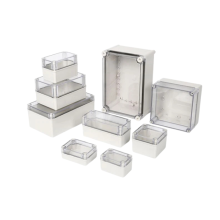
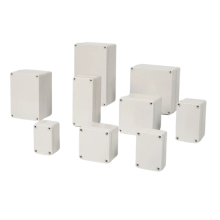
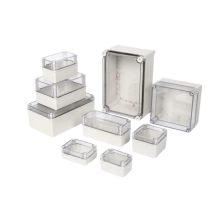
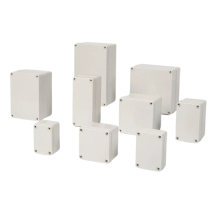
ADM GUIDE TO ELECTRICAL ENCLOSURES
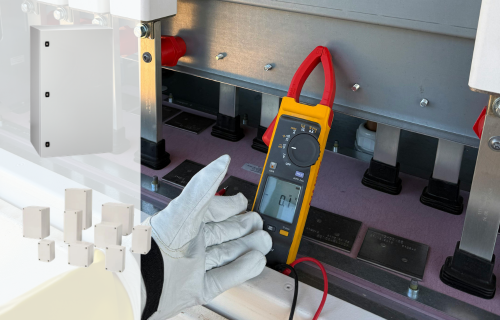
The enclosure is often overlooked as a given for any electrical or industrial automation application, but in reality, this humble box is effectively the first line of defence in keeping your installation safe and operational.
From keeping connections and instruments dust- and moisture-free, protecting against knocks and splashes, managing thermal stress, and preventing unintended contact with the controls, the electrical enclosure/control cabinet is an insurance policy to ensure operational capacity is maintained. In this article, we will discuss all of these aspects, providing insights into enclosure products and how our range can support your next installation.
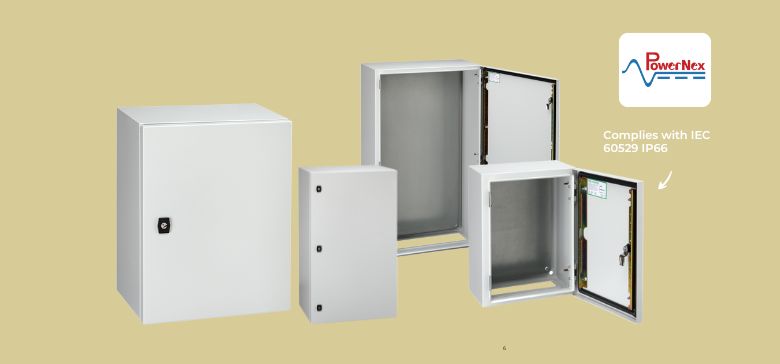
Enclosures IP Ratings & Certificates
Determining the suitability of your enclosure for your intended application can come down to understanding the enclosure's intended environment and the certifications that match it. This can be from understanding what types of environmental factors, such as various forms of water, impact, heat/flame resistance, and even potential for extremely hazardous conditions, such as explosive conditions.
Ingress Protection / IP Rating
In the industry, Ingress Protection is more commonly understood as protection against dust and water. We typically observe that lower IP ratings, such as IP20, are used for dry indoor/housed installations, whereas the top end of IP69 is reserved for products that are effectively dustproof and can withstand high-pressure water jets.
The IP code consists of two numerals, each corresponding to a rating scale for specific protection. The first numeral indicates protection against solid objects, ranging from 0 (no protection) to 6 (no ingress of dust). The second numeral indicates protection against liquids, ranging from 0 (no protection) to 9 (high-pressure hot water from various angles). If you’d like to understand this topic further, we explain the IP rating scale in depth in this blog post about Waterproof Connectors Stocked by ADM.
In Australia, it is common for products manufactured offshore to feature an IEC rating, sometimes either alongside or replacing an IP rating. IEC ratings are recognised by Australian regulators, with a reciprocal AS rating.
IK Impact Rating / IEC 62262
The impact rating helps installers understand an enclosure's robustness, typically displayed as an “IK rating”. Similar to the IP ratings, the IK rating scale ranges from IK00 (no protection) up to IK10 (highest). The IK scale represents the degree of testing, with the IK10 tolerance rated against the impact energy (20 joules) of a 5kg mass dropped from half a metre on the enclosure.
UL 94 Standards / Flame Retardant Ratings
The UL 94 standard addresses how quickly a material stops burning after a flame is removed and whether dripping, flaming plastic could contribute to secondary fires. This rating has three categories: Horizontal (HB) & Vertical Burn (V) testing, and 5V series Extreme Tier resting.
The 5V series test is reserved for mission-critical enclosures, including electrical cabinets. This test uses flames that are 5 times as intense as those in the standard HB and V tests. Plastic enclosures with a UL94VA rating have been tested with a 5-inch flame, have stopped burning within 60 seconds, and the material must remain a solid barrier.
Types of Enclosure Substrate
Identifying the right substrate for your enclosure really comes down to finding the harmony between mechanical requirements, environmental factors of the intended location, and total lifecycle cost. As many enclosures are installed for permanent fixtures, this lifecycle can range from years to decades, so picking the right substrate is incredibly important.
Non-Metallic Substrate Enclosures
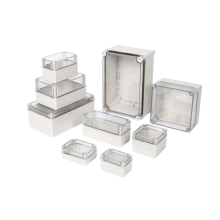
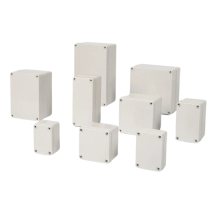
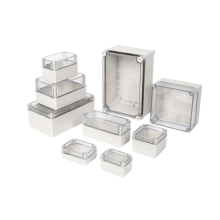
Non-metallic substrate enclosures are a great option, offering cost-effectiveness, lightweight design, rust resistance, and RF transparency for IoT applications. There are two standards of plastic enclosures in this category;
- Acrylonitrile Butadiene Styrene, ABS Plastic
- Polycarbonate
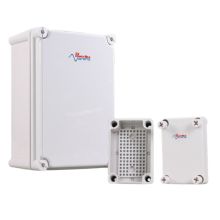
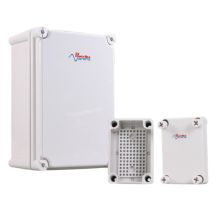
ABS enclosures are better suited for indoor applications, as ABS cannot withstand prolonged exposure to direct UV light, which can cause chalking and brittleness. Our range of Power Source ABS enclosures features IP66 ingress protection, a flame-retardant UL94-V2 rating, and IK-08 impact resistance, making them more than ideal for server rooms and general industrial environments; however, they may fail in certain wash-down environments where chemical cleaning agents are used.
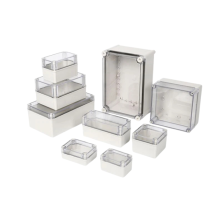
Polycarbonate enclosures are often considered the gold standard for non-metallic substrates, with properties that can make them comparable in strength to metal substrates. Our range of PowerNex TJ-AG polycarbonate enclosures features an IP66 rating, an IK-9 impact rating, and a UL95-5VA flame-retardant rating. These enclosures can be used in outdoor settings and are ideal in most industrial settings where sunlight, high heat, and potential knocks are present.
Cable Gland Installation on ABS & Polycarbonate Substrate Enclosures
For general installations on the ABS and Polycarbonate enclosures, using a polyamide nylon gland is standard practice, providing strain relief for PVC cables. When using ABS and polycarbonate enclosures for IoT or wireless communications, EMC cable glands can be used to ground electromagnetic interference, effectively turning the enclosure into an EMI shield.
Metallic Substrate Enclosures
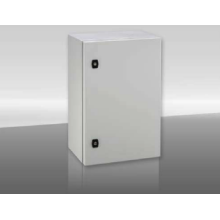
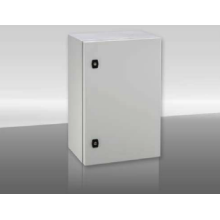
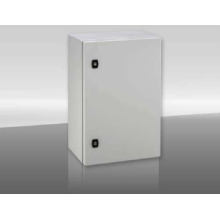
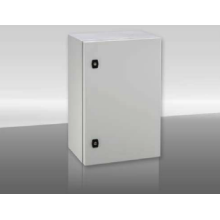
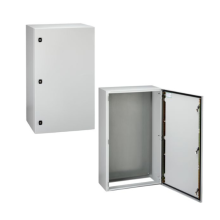
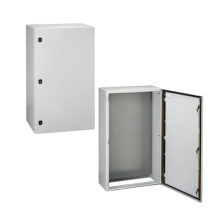
Metallic substrate enclosures are the industry standard for electrical enclosures, control cabinets and distribution boxes. Our range of PowerNex FT and ST enclosures is a series of powder-coated mild steel enclosures in various sizes, ensuring a high degree of robustness and added protection against corrosion from oxidation and moisture. The additional benefit of metallic enclosures is their heat-sink capabilities, enabling the substrate to transfer heat away from the power supplies within.
The FT and ST series feature the standard textured epoxy polyester powder coating finish, with options for RAL 7032 pebble grey or RAL 7035 light grey. Both of these ranges have a standard IP66 ingress protection rating and an IK10 impact rating, making them incredibly robust and secure in industrial settings.
Both FT and ST enclosure ranges come standard with mounting plates, lock systems, gland plates, fixing accessories, sealing gaskets, and pre-drilled holes for earthing.
If you’d like to explore the various dimensions and options for our electrical enclosures, this article outlines the different models available.
Cable Gland Installation on Metal Substrate Enclosures
All of our metal enclosures come with removable gland plates, allowing installers to remove the plate for punch pressing clean holes without damaging the main enclosure. For general installations, we recommend installers use nickel-plated brass cable glands. For installations where salinity is an issue, stainless steel glands may be better suited for the conditions. Always ensure your gland features an O-ring to provide IP66 ingress protection and minimise moisture ingress into the enclosure.
Mounting DIN Rails in your Metal Enclosures
The FT series features a standard removable 2mm galvanised steel mounting plate. Best practice recommends removing the mounting plate and using a benchtop to securely fasten the TS-35 DIN rails to it. Installers can also position DIN rail-mounted power supplies, control modules, and monitoring equipment during this process, before installing them into the enclosure and fitting the cables.
Customising Your Enclosure
Not every enclosure is made equal; however, some applications demand a few extra features to ensure their setup is fit for purpose. Accessories can range from various lengths of TS-35 DIN rail to other mounting hardware, cooling fans, sensors, alarms/buzzers, switches, and even enclosure switches, to ensure you have peace of mind about the status of your electrical cabinet. If you’d like to learn more about our range, visit our blog, Accessories to Optimise the Capacity of Electrical Enclosures here.
Thermal Management of Electrical Enclosures
Metallic enclosures are quite good at managing the heat of enclosures due to their nature to operate as a heat sink to the electrical components within; however, in some circumstances, these components can run ‘too hot’ and can compromise neighbouring components by raising ambient temperature.
Some basic strategies for thermal management typically include placing your enclosure in a shaded position away from direct sunlight and weather, using air conditioners and heat exchangers if installation is indoors, and, lastly, installing fan systems to blow warm air out.
In some remote locations across Australia, where very warm days and very cool evenings occur, moisture has been found within IP66 enclosures. This condensation is attributed to a pressure differential caused by warm air pushing out through the gasket seals, and conversely, during the evening, sucking cool air back through the seals, creating condensation. Some typical methods to combat this include pressure-compensated plugs/breather vents or DIN rail-mounted anti-condensation heaters.
Learn more about Electrical Enclosures.
Would you like to learn more about our range of electrical enclosures? Contact the ADM team today! Send any questions about our enclosure range and the ADM team via our contact page or call the team directly on 1300 236 467.