

What does VA Rating mean for AC Transformers?

If you’re new to AC Transformers, you’ve probably noticed a range of ratings such as 25VA, 50VA and even upwards of 300VA, with the question, " What does VA actually mean, and why does it matter?
Well, as elementary as it may seem, understanding VA and your required rating is an integral part of selecting the right AC transformer for your application. Selecting the wrong one can lead to premature failure.
What is VA?
VA stands for Voltage-amps, a unit used for apparent power in an electrical system. This concept can be understood in this relationship:
VA = V x I
This means VA represents the total electrical load a transformer can safely supply to an application. Voltage (V) is the electrical pressure, while current (I) is the flow of electricity. By applying both of these, they can determine how much demand is placed on the transformer.
VA vs Watts: What’s the difference?
It is common for confusion to arise around the difference between Voltage Amps (VA) and Watts (W).
Watts measures the energy used to perform the work, whereas VA measure apparent power, which includes both usable energy and inefficiencies in the system.
In applications that rely on resistive loads, like incandescent lighting, VA and Watts are effectively the same. However, in more modern applications such as LED lighting, control systems aren’t purely resistive. These systems introduce inefficiencies that can cause the VA rating to exceed the wattage rating.
Users will often find that AC transformers are rated in VA rather than Watts, showing their total electrical demand, not just the useful converted power for work.
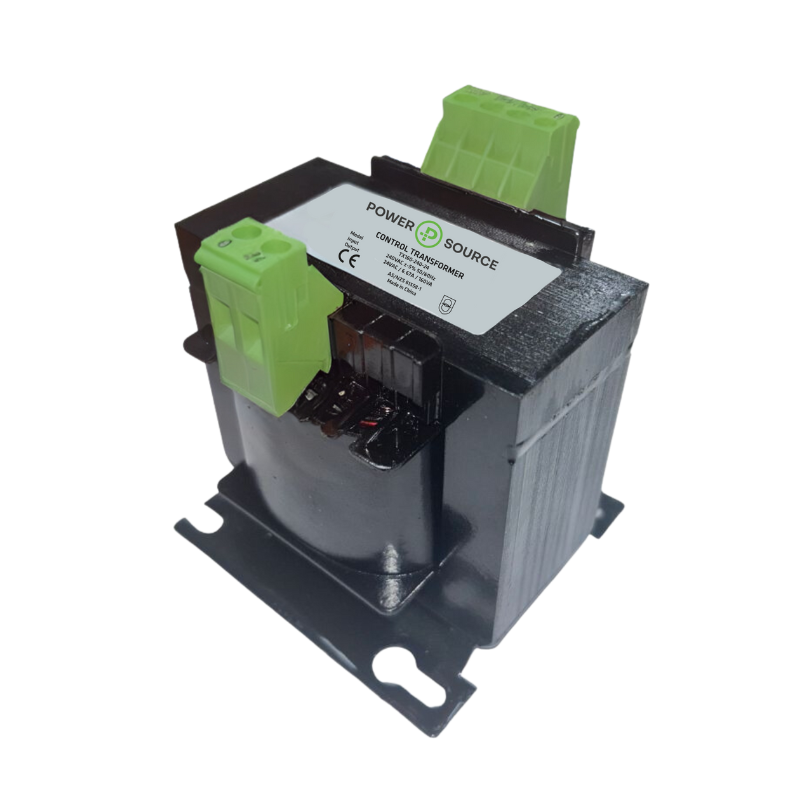
Why is the VA rating so important?
The VA rating defines a transformer's maximum load capacity, and choosing the correct rating ensures it operates safely.
The general rule of thumb is that if the load exceeds the VA rating, the AC transformer will overheat, leading to inefficiency and eventual breakdown. Whereas the ‘bigger is better rule’ may apply here, as using a transformer with a higher VA won’t typically pose any significant risks and potentially improve reliability.
Calculating the required VA rating
Determining the correct VA rating is straightforward once you know your system's voltage and current requirements. For a single device, multiply the operating voltage by the current draw; for multiple devices, add their individual VA requirements to find the total load.
Industry practice dictates that it may be wise to allow a safety margin, typically 20% to 30%, to account for start-up surges, inefficiencies, and the potential for system expansion.
Need Help Finding the Right AC Transformer?
If you’re searching for an AC transformer solution, our Power Source TX series offers a wide selection of single-phase options to suit just about any application. If you have any questions, the ADM team is here to help you find the right solution for your installation. Send any questions through to the team via our contact page here or call the team directly on 1300 236 467.
