AC TRANSFORMERS - A GUIDE FROM CONSTRUCTION TO APPLICATION
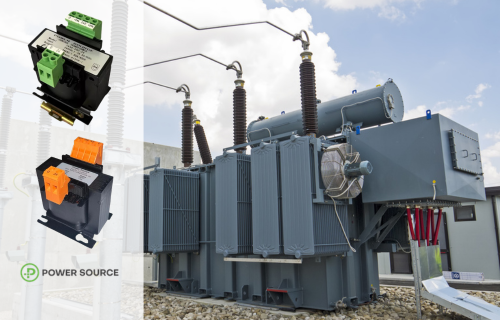
Magnetic AC transformers are passive, robust power supplies that operate on the fundamental principle of electromagnetic induction. Their simplistic design removes the need for active semiconductor components, with power transfer relying solely on the interaction of copper windings and a laminated magnetic core.
Power Cabinet Defence
AC Transformers can often serve as a line of defence in your power cabinet, protecting sensitive electronics. Due to the magnetic inertia of the heavy metal core, often heavy steel or iron, the core requires some time to magnetise and demagnetise, optimised for the 50Hz fundamental frequency, acting as a low-pass filter. This prevents high-frequency transients, harmonics, and rapid voltage spikes from generating magnetic flux in the core at the fundamental frequency, so the flux is smoothed or blocked before reaching the secondary circuit.
Galvanic Isolation – Traversing the Air Gap
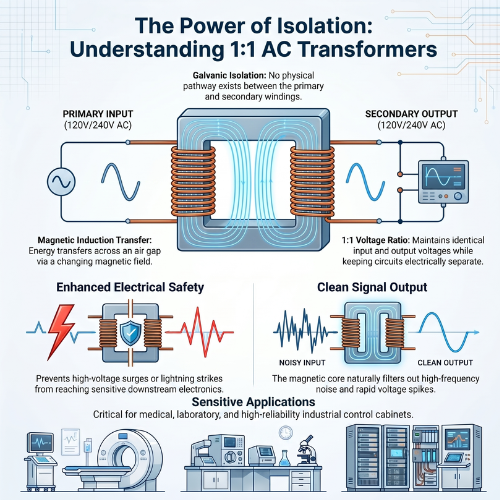
The primary advantage of using a magnetic transformer is galvanic isolation. There is no physical electrical pathway between the primary (input) and secondary (output) windings. Instead, energy is transferred via a magnetic field across a physical air gap. This separation prevents mission-critical components from being affected by catastrophic events such as lightning strikes or direct shorts, as high-voltage surges cannot physically traverse the circuit.
AC Transformer Types: Isolation and Control Transformers
There are two main types of transformers, isolation transformers and control transformers. Both types can feature galvanic isolation as part of their design, but purely isolation transformers tend to include an additional layer of protection in the form of an electrostatic shield, also known as a Faraday shield. Isolation transformers produce a 1:1 input-to-output ratio, separating circuits for safety and noise reduction, making them ideal for applications such as medical instruments or high-sensitivity installations.
Alternatively, control transformers are designed to step up or down the input and output voltages. This process is determined by the relationship of the number of windings on the primary and secondary. If the secondary windings have 1/10 as many turns as the primary side, this is a step-down, such as taking 240VAC down to 24VAC. The inverse is that if the secondary windings have more turns than the primary windings, it creates a step-up transformer.
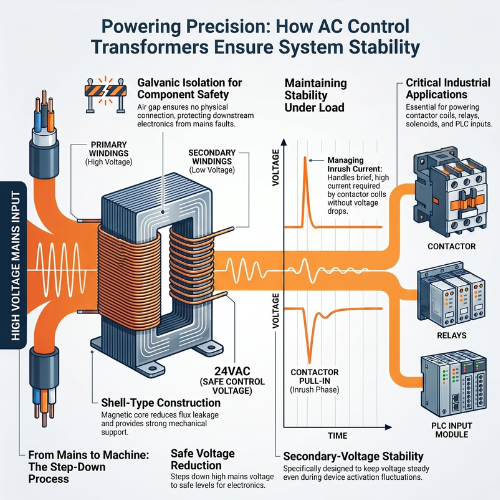
Control AC transformers can be used for contactors, relays, solenoids and PLC inputs. Control transformers are also particularly good at maintaining secondary-voltage stability during inrush currents, more so than a generic transformer might.
Like to learn more about Isolation and Control AC Transformers, click here.
Core Geometry – Stacking Shapes & Winding Copper
The core of the AC transformer is designed to guide magnetic flux between primary and secondary windings. The transformer's anatomy comprises a heavy metal core and various arrangements of copper windings that transfer electromagnetic induction.
The core is made up of silicone steel laminations (E, I, U or L shapes) and stacked upon one another in alternating fashion. These laminations are applied to reduce air gaps and low reluctance of the magnetic circuit, minimising hysteresis and eddy-current losses.
Winding arrangements are tasked with moving the magnetic flux around the transformer, transferring energy across the air gap from the primary windings to the secondary windings. Their configurations will directly affect electrical performance, insulation, cooling, physical integrity, and suitability for varying voltage and current levels.
There are two common types of AC transformers: core-type and shell-type.
Core-Type Transformers
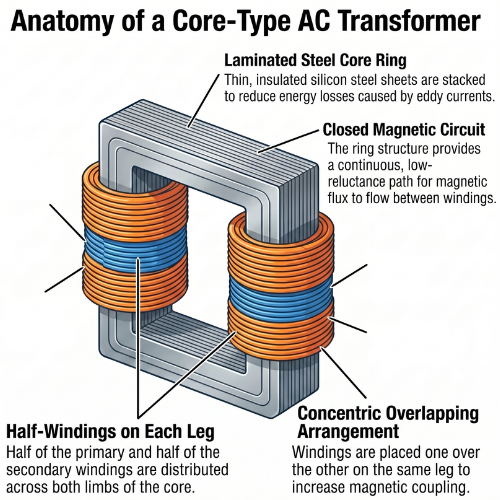
Core-type transformers feature windings placed around the outer limbs of the core. Each winding is split equally between the two limbs, ensuring both windings share the same magnetic path and supporting energy transfer. Core-type transformers: the magnetic flux links the primary and secondary windings and often leaks through steel and air. The core-type transformers are simple in construction and are more commonly found in medium and higher-power applications.
Shell-Type Transformers
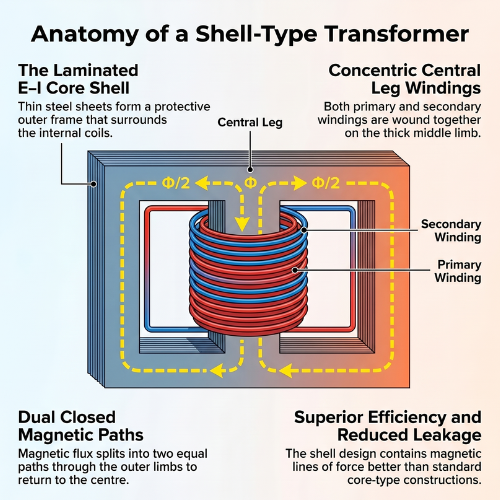
Shell-type transformers differ from core-type in that the magnetic core surrounds the windings, with both primary and secondary windings wound onto a single central limb, whilst two outer limbs complete the magnetic circuit. The central limb will carry the full magnetic flux, as it features twice the cross-sectional area of each outer limb, leaving the outer limbs to carry half the total flux.
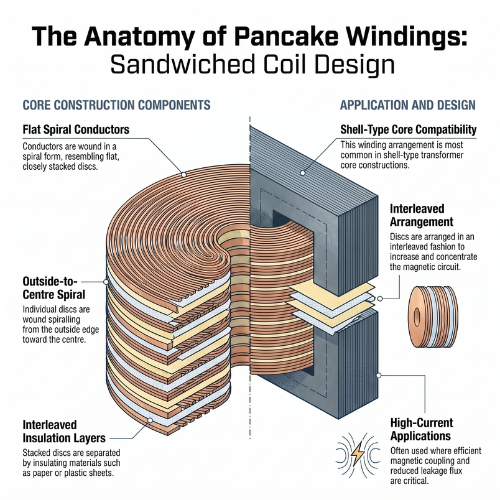
Shell-type will typically feature pancake or sandwich coils with insulated flat conductors to control flux leakage and maintain clearances. The compact arrangement creates two parallel flux paths across the outer limbs, reducing flux leakage, shortening the magnetic path, and providing strong support during short circuits. Shell-type transformers are common in control, electronic and instrument transformers where compact size and short-circuit strength are important.
Want to learn more about Shell-Type and Core-Type AC Transformers? Click here.
Winding Arrangement Variations
Transformer winding arrangements are just as important as the core geometry. Their shape and configuration will guide the magnetic flux and therefore the transformer's overall efficiency. Winding arrangements can affect the following;
- Leakage reactance and magnetic coupling
- Voltage insulation between turns, layers and windings.
- Thermal efficiency: shedding heat and cooling
- Mechanical strength during short-circuit conditions
- Suitability for high-voltage or high-current operations
The variance across configurations can mean that one variation performs incredibly well in specific applications and poorly in others, making it important to understand which configuration is best for each application.
There are three main types of winding arrangements: concentric windings, pancake/disc windings and helical windings. Each of these arrangements caters to various electrical applications, and we can expand further below.
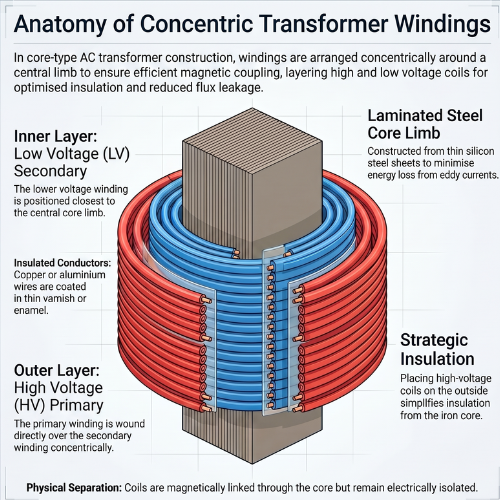
Concentric Windings
Concentric windings are more commonly found in core-type transformers. This arrangement consists of windings placed around the same core limb, winding one inside of the other, sharing a common axis.
Concentric windings will typically have the low-voltage winding placed closest to the core, with the higher-voltage winding wound around it. This arrangement helps meet insulation requirements and keeps the winding structure simple, resulting in a practical and efficient design for standard power and distribution transformers.
The concentric winding arrangement is straightforward but also offers variations for different applications, such as cylindrical layers, discs, and sections, each with appropriate voltage ratings, current levels, and thermal requirements.
Pancake / Disc Windings
Pancake windings are made from forming flat conductors into a spiral-shaped coil or stacking discs, named from how they appear: thin, flat discs (or pancakes) stacked one above another.
This type of arrangement is more commonly found in larger, higher-voltage units. Their design will feature sections or series of discs separated by insulation and cooling ducts, increasing thermal management and voltage stress in high-range applications.
This arrangement can often feature winding sections with oil ducts or be more open to allow airflow to support thermal management, dissipate heat, and enhance the transformer's electrical performance.
Helical Windings
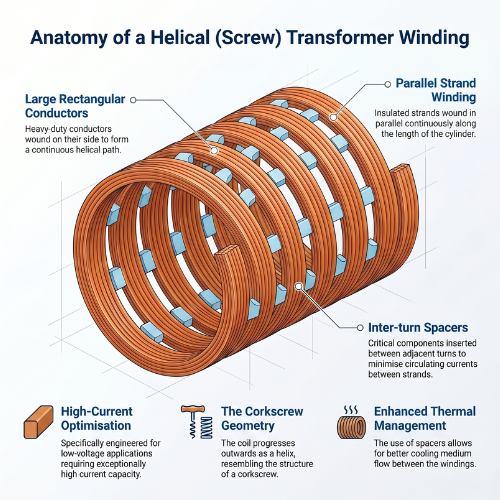
Also known as screw windings, they are commonly found in low-voltage, high-current transformers. They are typically found in rectifier transformers, furnace transformers, and industrial power systems.
This type of winding arrangement consists of a conductor wound in a continuous helix around the core, resembling a screw thread or a corkscrew. The helical arrangement comprises a conductor in a regular cross-section with multiple parallel strands. Having several strands promotes a more even current distribution, reducing losses due to resistance and proximity effects.
Helical windings are designed with adequate spacing, support, and insulation to maintain structural integrity and better withstand mechanical stresses during fault conditions, such as short-circuit faults. These types of winding arrangements can also feature spacers between turns or sections to draw heat away from the windings, helping them remain stable under load.
Winding Design Considerations
Understanding that the choice of winding is influenced by many interacting factors. Voltage level is important, but so are current rating, fault-withstand capability, insulation class, cooling methods, and physical dimensions.
For example, consider a compact transformer for general distribution may prioritise simplicity and cost, making concentric windings the natural choice, whereas a large power transformer may require disc windings for better insulation stress and thermal management.
If you'd like to learn more about AC Transformer winding configurations, click here.
AC Transformer Insulation – Varnish Impregnation
Transformers are insulated to protect them from humidity and moisture. The impregnation process, more formally known as varnish impregnation, involves immersing the AC transformer in a liquid varnish, removing it, and allowing it to cure. This process effectively saturates and seals the transformer's windings, improving electrical insulation and resistance to moisture and dust, promoting better thermal regulation, and reducing vibration noise. Added benefits include anti-fungal capabilities, as porous surfaces on the AC transformer are now sealed, making these power supplies suitable for tropical environments.
Vacuum Pressure Impregnation
For users requiring protection and insulation for more specific, rigid, or specialist applications, the vacuum pressure impregnation process can provide a far more thorough insulation. This process removes air via vacuum, effectively saturating the AC transformer with varnish or resin, and provides a higher degree of protection in high-vibration applications by preventing failures caused by mechanical ‘hum’.
To learn more about varnish impregnation for AC Transformers, click here.
Sizing & VA Rating the right AC Transformer
Understanding the volt-ampere requirements of an installation requires installers to accurately size the AC transformer they intend to use. This process ensures that adequate power is supplied to all control components. For example, within an HVAC control system, this may require stepping down mains power from 240VAC to 24VAC; installers may need to understand the total VA load, not just the nominal load.
For HVAC systems, installers will need to calculate the steady-state load and account for inrush from contactors/relays/actuators before selecting a transformer with sufficient margin to ensure the control voltage remains within acceptable limits during both start-up and normal operations.
- Consider grouping your components into these three groups when sizing your AC transformer.
- Continuous Loads
- Components such as thermostats, controllers, sensors and pilot lights.
- Intermittent Load
- Components such as relay coils, contactors, solenoids and valve actuators.
- Inrush Demand
- Various components require a higher VA draw at pull-in than at hold. These can be components such as coils and actuators.
Calculating Sealed and Inrush VA
Calculating the total power demand of the components within the continuous and intermittent load groups is known as sealed VA, also called steady-state VA.
Once the sealed VA has been determined, installers can determine the inrush VA required for start-up. For example, the TX100-240-24 may be a suitable solution for an HVAC installation with a sealed VA rating of 22 VA and an inrush VA of 90 VA; however, for more conservative installers, the TX160-240-24 may provide the added headroom to eliminate the risk of dropouts entirely.
FAQ - Operational Challenges
In this section, we cover some common problems with AC transfers in an FAQ format.
Operational Challenge: Can you run a 60 Hz transformer on 50 Hz?
Usually not at full voltage. A transformer designed for 60 Hz will often run hotter at 50 Hz because the lower frequency increases core flux density, which can push the transformer toward saturation.
What is saturation?
Saturation occurs when the transformer core’s magnetic material cannot support any more flux for the applied voltage and frequency; beyond that point, additional voltage produces a large increase in magnetising current instead of proportional flux. When a core approaches saturation, the magnetising current rises sharply, generating excess heat, increasing losses, and risking distortion or damage to the windings and supply. Keeping flux below saturation (by reducing the applied voltage at lower frequencies) prevents these outcomes.
What is the risk?
The main risk is excess heating. That can reduce insulation life, increase losses, and shorten the transformer’s service life.
Will it still work?
Sometimes, yes — but only if it is properly derated or the input voltage is reduced to suit the lower frequency. The safe operating range depends on the transformer design.
What is the rule of thumb?
If the frequency drops, the applied voltage usually needs to drop as well. Always check the manufacturer’s frequency rating before using the transformer on a different supply frequency.
Operational Challenge: Can you convert 3-phase 415 VAC to 240 VAC?
In installations where only three-phase power is available, supplying standard 240VAC equipment can be challenging—particularly where a neutral conductor is not readily accessible or practical to install. This often leads to additional work, including running a neutral, modifying distribution boards, and adding protection and filtering components.
A practical alternative is to use a 415 VAC (line-to-line) primary transformer to generate a 240 VAC secondary supply. This approach removes the need for a neutral line from the source supply by creating a separately derived voltage, simplifying wiring and reducing installation complexity.
The Power Source TX series offers a range of 415VAC input transformers with secondary outputs of 240VAC, 110VAC, and 24VAC, with power ratings from 40VA to 2500VA. These transformers provide galvanic isolation between primary and secondary, improving safety and reducing electrical noise transfer.
Operational Challenge: Common Winding Failures and Internal Faults
Inside AC transformers, the winding systems are a common site of severe internal failure. If a winding develops a fault, the outcome can often be catastrophic, requiring extensive repairs or, in the worst case, complete loss of the asset.
What’s the Problem? Insulation Failure.
Each turn of copper or aluminium winding is separated by insulation. Depending on the transformer's voltage class and intended application, the winding insulation may include paper, pressboard, enamel, varnish, resin, or oil-impregnated cellulose.
A winding can short-circuit when the insulating medium loses dielectric strength and can no longer withstand the applied electrical stress. Once insulation fails, current can bypass its intended path through one or more turns, creating an internal fault. This effectively overheats the transformer, causing rapid thermal deterioration and further damaging the surrounding insulation and conductor materials.
This failure in the insulation can lead to the following common failures:
Turn-to-Turn Faults
Often considered the first stage of winding failure, a small breach in the insulation allows the adjacent turns to short together, creating a circulating fault current within a section of the winding. This results in localised heating, carbonising the insulation, deforming the conductors, and spreading to neighbouring windings.
Phase-to-Phase or Phase-to-Earth Faults
As the insulation condition continues to deteriorate, the turn-to-turn fault may continue in a more severe internal discharge path. If observed in three-phase transformers, this can lead to arcing between windings, between phases, or between windings and the core structure.
Mechanical Deformation
External short-circuit events subject transformer windings to very high electrodynamic forces, squeezing and pulling the internal windings out of position and, in turn, stressing insulation. Over time, repeated exposure to fault conditions can lead to further mechanical breakdown and internal short-circuiting.
Winding failures are among the most damaging transformer faults, as they can rapidly combine thermal, mechanical, and electrical stresses, compounding wear and tear and potentially leading to catastrophic failure.
Power Source TX Series
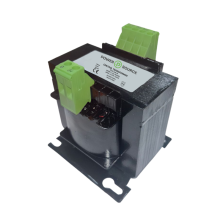
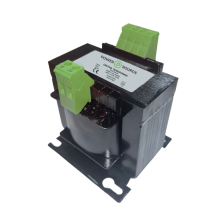
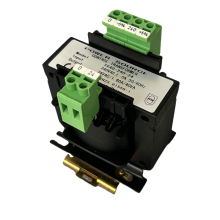
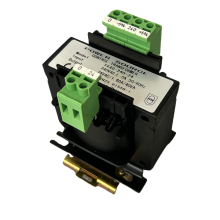
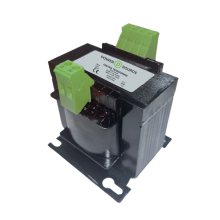
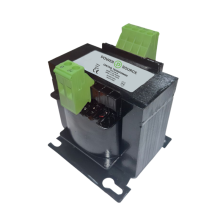
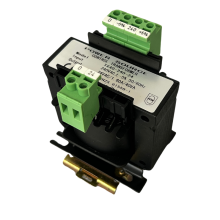
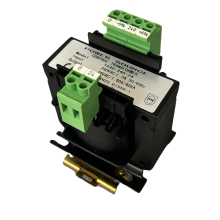
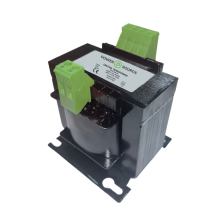
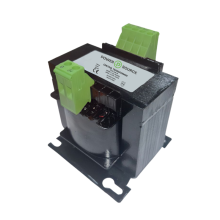
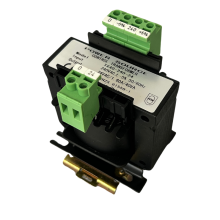
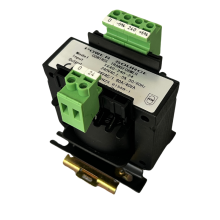
At ADM, we stock a range of cost-effective control AC transformers from Power Source, the TX series.
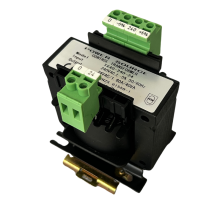
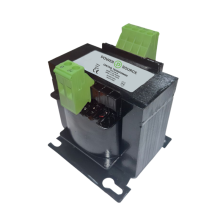
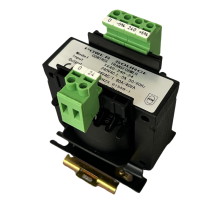
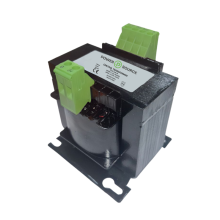
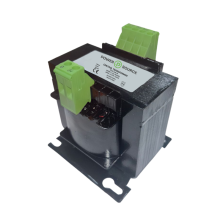
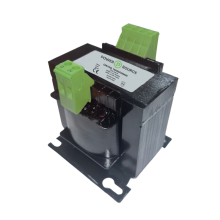
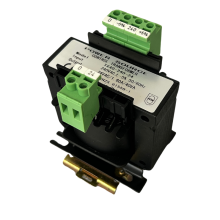
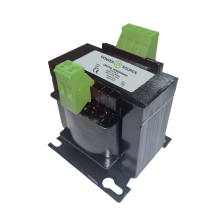
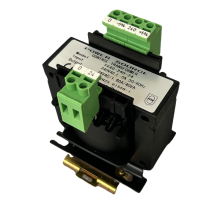
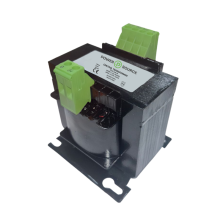
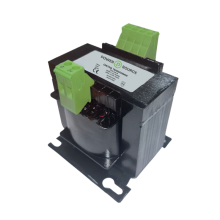
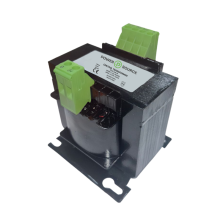
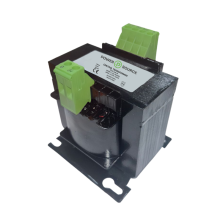
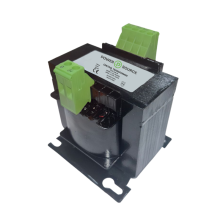
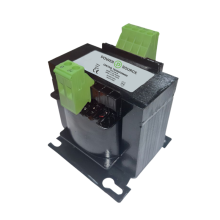
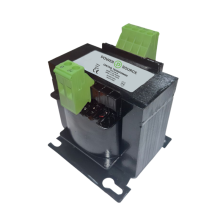
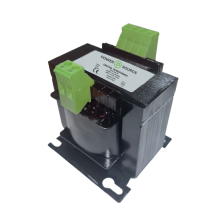
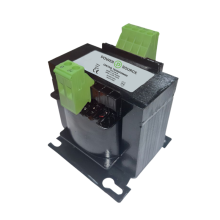
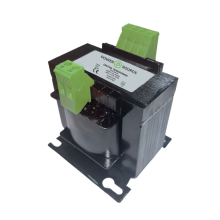
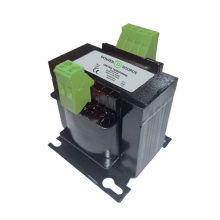
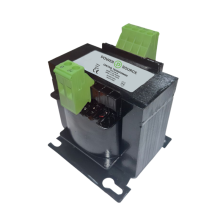
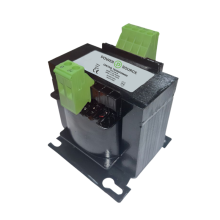
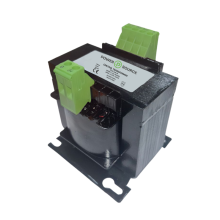
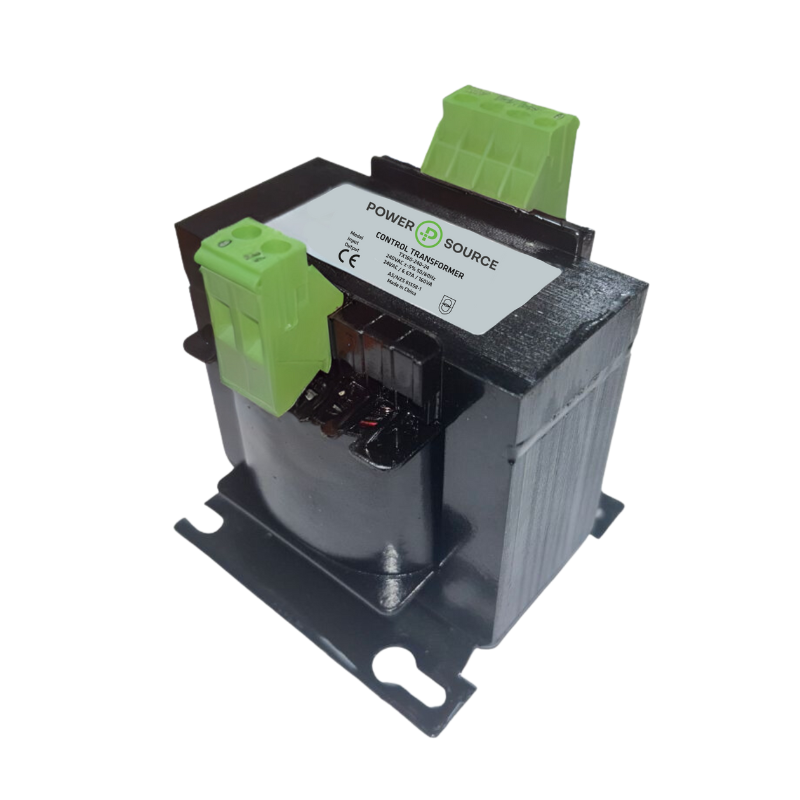
Our Power Source TX series AC transformers are concentrically wound transformers designed for control AC transformer applications. The TX series can be used in step-up and step-down powering applications. This range is designed with galvanic isolation, providing a safe voltage transfer and a clean output from the mains source. The TX range features models that can support input/output ratios from 1:1 to 17:3.1.
The TX range accommodates input voltages of 240VAC and 415VAC and converts 12VAC, 24VAC, 240VAC, and 415VAC, with power output ratings from 40VA to 2500VA.
Need Help?
If you have any questions, the ADM team is here to help! Send any questions via our contact page here or call the team directly on 1300 236 467.